
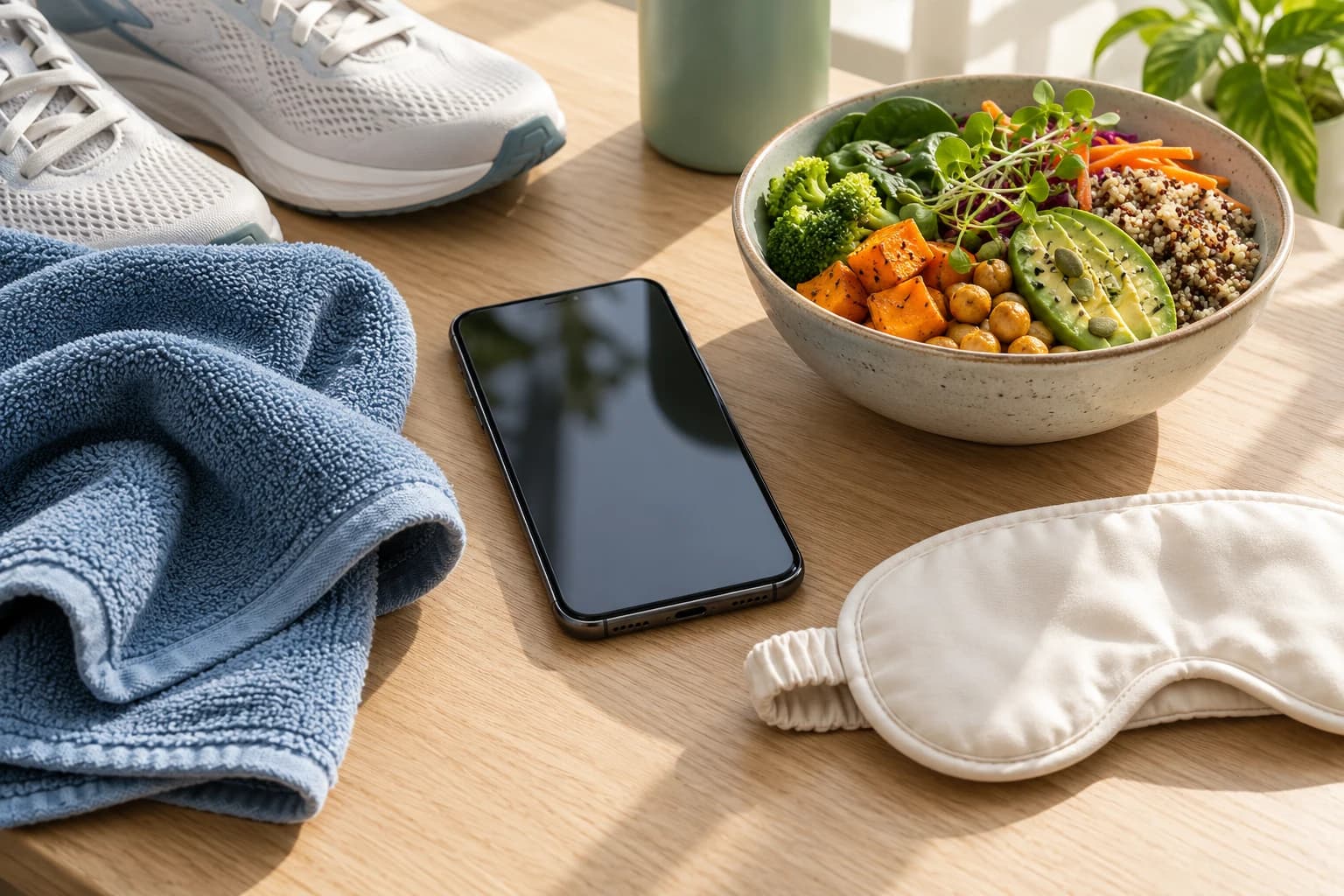
The next question is how the pieces connect
Google’s October 12 announcements put a familiar fitness question in focus: can one app connect the workout you did, the meal you logged and the sleep recorded overnight? Fitbit Edge supplies the hardware news, while app partnerships and automatic tracking illustrate the wider direction. The useful question goes beyond collecting records in one place. It is whether an app can show what those records mean, correct mistakes and help you review a practical next step. Connected fitness should make the routine easier to understand, rather than merely enlarge the dashboard.
Fitbit Edge adds a display to the coaching experience
Google announced Fitbit Edge as a slim tracker positioned between a screenless band and an advanced smartwatch. It includes a display, GPS and more than 50 manually selectable exercise modes. Google opened preorders on October 12, with retail availability announced for October 27. Health Coach access requires Google Health Premium and other stated requirements; the assistant itself predates this launch. These are manufacturer descriptions, not a hands-on review. The hardware offers another way into Google’s ecosystem, but a display does not independently establish the quality of a recommendation or the completeness of its inputs.
Automatic tracking changes how the record begins
Google says upgraded automatic activity recognition, expanding to more than 100 activities, is rolling out later in October. It uses context including history, manual corrections and permitted location. Its claimed detection improvements come from offline evaluations against the prior model. That is useful development evidence, not proof of the same performance for every reader. The practical implication is worth considering: an automatically created record still needs a way to check what happened. Ask whether you can inspect the activity label, time and duration, correct a mistake and distinguish detected information from information you entered yourself.
A meal log can add context without becoming a measurement
Google describes expanded MyFitnessPal sharing, with food-specific detail for Premium users, as well as meal logging by photo or chat among its recent app improvements. That connects nutrition information with the broader coaching experience. It does not make every food entry exact. In a hypothetical example, a photograph may not reveal an ingredient or the full serving size. Before a meal estimate informs a decision, review what the record contains. An app should make it easy to distinguish an entered portion, an inferred portion and a missing detail. More connected records are useful when their uncertainty travels with them.
Sleep can frame a question, not settle the answer
Imagine a hypothetical reader who recorded less sleep before a difficult training session. That is relevant context, but it does not establish why the workout felt difficult. A useful assistant might ask about the planned session, actual effort or an important constraint before proposing a change. A missing night also deserves attention: no record is not the same as no sleep. The more an assistant connects daily information, the more clearly it should identify what it used and what it assumed. A fluent explanation should leave those distinctions visible.
A partnership announcement is not a completed transfer
Google and Flo Health announced consent-based app syncing planned for early 2027. The proposed connection links cycle information with supported wearable metrics. That timing matters: an announced partnership should not be described as an integration readers can already turn on. It also highlights a broader design question. Before sharing information between services, understand which fields move, why you want them connected and how to control the connection. One permission should not be interpreted as agreement to every conceivable use of the information. Sensitive context needs a clear purpose, even when personalization is the stated benefit.
Wellness trends are different from clinical readings
Google describes Health Guardian expansion to Fitbit Air and Edge later in October, subject to Premium and eligibility requirements. Its blood-pressure and insulin-resistance trends are wellness features. Google explicitly says they are not real-time clinical readings, diagnostic screening for hypertension or diabetes, or a basis for medication changes. Keep that distinction separate from the presence of sensors or the confidence of a coaching answer. A trend label is not a conventional cuff measurement or glucose result. Regional, device and other requirements also mean an announcement is not a promise of universal access.
The correction loop matters as much as the connection
Consider a hypothetical app that detects a walk twice: once from the wearable and once from another connected service. More records have arrived, but the day is not more accurate until the overlap is handled. Or imagine a food entry that later changes after its portion is reviewed. An explanation based on the earlier entry may need reconsideration. These are product-design questions rather than claims about a fault in any named app. A useful connected experience should let you trace a summary to its records and understand how a correction affects the interpretation.
Where Connefi and PERI fit
Connefi brings workout records, nutrition, recurring plans, goals and supported connected-health information into a fitness-centered routine. PERI can use selected relevant context available to a request to explore a question and propose supported adjustments for your review. That is not a claim of identical features to Google Health, direct Fitbit Edge integration or automatic recognition of every workout. Connefi’s released tools and available inputs define what it can do. Its PERI and Methods & Limitations pages explain the difference between recorded information, estimates and AI suggestions. The user remains responsible for reviewing an adjustment against their circumstances.
A useful assistant should make its reasoning reviewable
Before following a suggestion, ask three practical questions: which records informed it, what is missing, and what would change the recommendation? You might also check whether the proposed change is actually supported by the app or merely described in a conversation. This is a way to assess an assistant’s usefulness, not a clinical validation method. A confident answer does not eliminate uncertainty. Good control includes being able to decline, correct the context or ask a narrower question without treating the assistant as the authority over your routine.
One app can connect records without knowing the whole day
The October announcements show a concrete move toward shared nutrition records, broader activity recognition and permissioned context. Each connection has its own scope and availability. The valuable experience is not simply the one with the most partners or sensors. It is the one that helps a reader understand which information arrived, how it was interpreted and which decision remains theirs. Workouts, meals and sleep can belong in one conversation while retaining different sources, levels of precision and limits. That is the standard connected fitness needs to meet.
Research & sources
Research provides context; it does not validate Connefi’s exact scores or establish individual outcomes.