
Start with the ability you want to improve
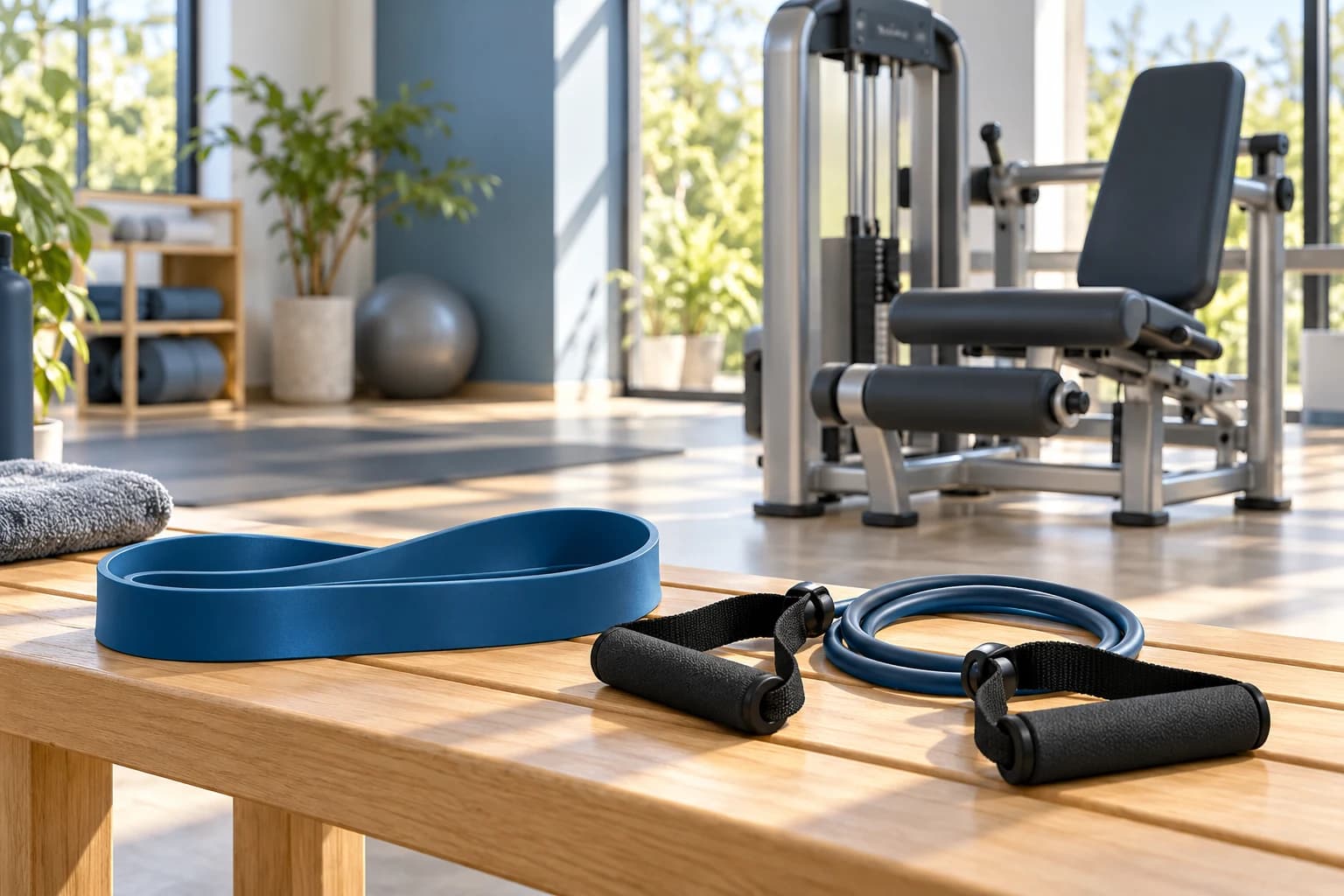
A resistance band fits in a drawer; a gym machine occupies a dedicated space. That practical difference does not establish which one is best for every person. A new research review asks a more targeted question: how do exercise approaches compare for physical function in older adults with sarcopenia or frailty? Its findings point toward different tools for different outcomes. They should not be turned into a contest declaring one piece of equipment the universal winner for every gym user.
Who the review studied
The BMC Geriatrics review, published October 16, combined 61 randomized controlled trials with 3,706 participants. Its focus was older adults with sarcopenia or frailty, not a general sample of young, healthy lifters. These related clinical concepts concern muscle health and vulnerability, and they require assessment beyond simply noticing a difficult workout. The population matters when interpreting the result: evidence collected for particular functional limitations cannot automatically rank equipment for bodybuilding, athletic performance or every home-exercise goal.
Different outcomes favored different approaches
The review reported an estimated 1.95 kg handgrip improvement for elastic-band training in the relevant comparison, with moderate-certainty evidence. Machine training showed a possible 2.96 kg knee-extension improvement, supported by low-certainty evidence. These refer to different tests; subtracting one from the other would not compare the equipment fairly. Multicomponent programs including resistance work showed broad benefits, particularly for mobility, with low-certainty evidence. None of these pooled estimates predicts an individual’s gain or establishes that bands beat machines for all kinds of strength.
A network comparison is not always a direct contest
The researchers used network meta-analysis, which can combine direct and indirect comparisons across connected trials. Not every approach was necessarily tested head-to-head against every other one. They also explored dose-response patterns: higher band-training volume and higher machine-training intensity were associated with greater effectiveness. Those exploratory findings are not universal instructions to add more work or heavier resistance. Exercise details and participant needs still matter. A ranking can help frame a research question while leaving uncertainty about the best program for a particular person.
What evidence certainty changes
Low certainty does not mean a result is automatically false. It means confidence in the estimate is limited and further evidence could change it. Moderate certainty also leaves room for uncertainty. For a reader, this is a reason to avoid treating a precise-looking kilogram estimate as a promise. Ask what outcome was tested, who participated and how much confidence the review assigns to the comparison. The more specific the proposed claim, the more closely those details should match it.
A band and a machine need different record details
As a practical recordkeeping example, a band exercise may depend on which band was used and how it was positioned. A machine entry can depend on the machine and its setup, not only the number on the stack. If these details change, a comparison across sessions becomes harder to interpret. This is not a clinical protocol from the review; it is a reason to keep the context of a movement visible. A useful history should help you understand what was done rather than merely accumulate totals.
Strength and everyday function are not identical goals
Improving a measured lift and making everyday movement easier are related but distinct objectives. A program that includes several exercise components may address a different question from a program focused on one strength test. Before choosing equipment, describe the activity you want to support and any important limitations. Someone receiving care for frailty, mobility problems or another significant condition may need professional supervision and an individualized program. An app or a research summary should not substitute for that assessment.
Choose something you can use appropriately
For a hypothetical reader comparing home and gym options, access, space, confidence and the ability to perform the movement all affect the decision. A portable band is not helpful if the intended exercise is unsuitable, and a sophisticated machine does not guarantee an effective routine. Start with a manageable plan appropriate to your circumstances, then review what you completed. Equipment choice is one part of that plan. The study does not supply a single progression rule or prove that the most demanding version is the best starting point.
Where Connefi fits
Connefi helps organize exercises, sets, repetitions, weights, rest periods and workout history. Recurring plans can keep the intended schedule visible, while recorded sessions show what was completed. PERI can use selected relevant context to propose supported adjustments for review. Those are general fitness tools, not an independent assessment of sarcopenia or a validated frailty rehabilitation service. Connefi does not determine a clinically optimal equipment choice from a workout log. Its Training, Plan and Methods pages explain what the records and interpretations can support.
There is no single winner for every goal
This review is useful because it preserves specificity: different approaches may support different abilities in a particular clinical population, with varying certainty. It does not justify a universal claim that bands replace machines or machines make simpler equipment obsolete. Choose an appropriate routine, record enough detail to review it and keep the outcome you care about in view. Better equipment decisions begin with a clearer goal, not a blanket ranking.
Research & sources
Research provides context; it does not validate Connefi’s exact scores or establish individual outcomes.